

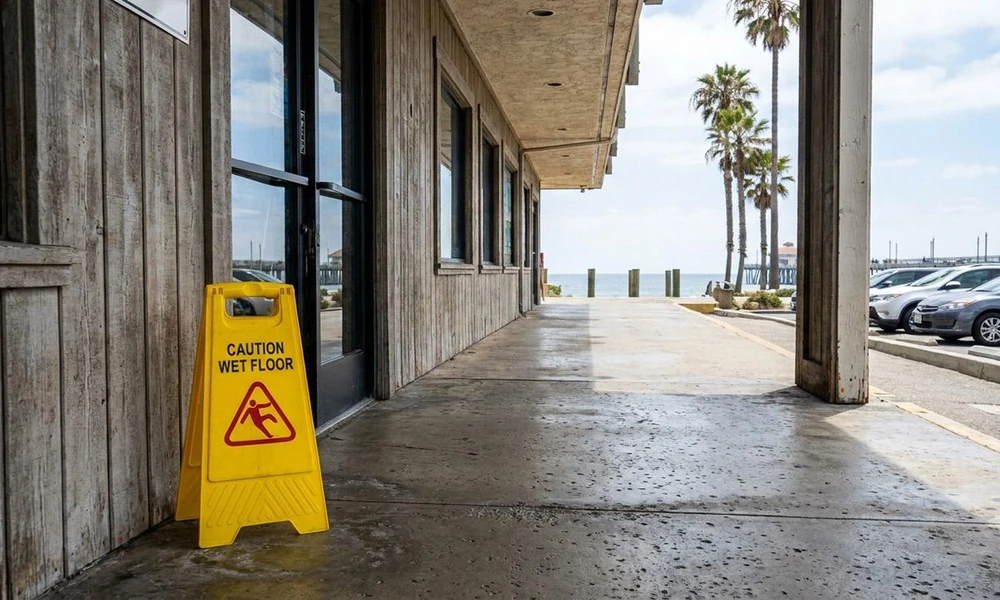
Liability for a Huntington Beach slip and fall usually falls on whoever controlled the property where you fell, whether that’s the owner, a tenant, or a business operator, and proving it means showing they knew or should have known about the hazard. Beachfront and Pacific Coast Highway businesses face extra foot traffic and weather exposure that can make hazards more likely and harder to excuse.
Huntington Beach draws crowds year round, from the pier to the shops lining Pacific Coast Highway, and all that foot traffic means slip and fall accidents happen more often than most visitors expect. Figuring out who is actually liable is not always obvious, especially when a property involves multiple businesses or a landlord and tenant sharing responsibility.
Liability Starts With Who Controlled the Property
The first question in any slip and fall case is who had control over the area where the fall happened, since California law generally holds the party responsible for maintenance liable for a dangerous condition. That is not always the name on the deed. It is whoever had the practical responsibility to inspect, clean, and repair the space.
This matters because Huntington Beach properties, especially near the pier and along PCH, often involve layered relationships between property owners, business tenants, and sometimes third-party maintenance companies.
Property Owners vs. Tenants vs. Businesses
In a typical retail lease, the property owner is usually responsible for structural issues, like a broken step or a cracked parking lot, while the tenant running the business is often responsible for conditions inside their space, like a spill on the floor. Some commercial leases assign these responsibilities differently, which is why lease agreements often become relevant evidence in these cases.
When a fall happens in a shared space, like a mall walkway or a shopping center’s common parking area, liability can extend to a property management company responsible for maintaining those areas. Sorting out which party is actually responsible is often one of the most contested parts of these cases.
Beachfront and PCH Business Liability
Businesses along Pacific Coast Highway and near the Huntington Beach pier deal with sand, saltwater mist, sunscreen residue, and heavy foot traffic, all of which can create slip hazards that a business is expected to manage. Courts generally do not accept “it’s the beach, floors get wet” as an excuse, since businesses operating in that environment are expected to account for it with mats, signage, and regular cleaning.
Operating near the beach does not lower a business owner’s duty of care. It raises the bar for how carefully they manage the risk.
A business can still be found negligent if it fails to adjust its maintenance routine for its own foot traffic patterns, even when the underlying hazard, such as sand tracked in from outside, seems like an unavoidable part of doing business near the coast.
Proving Notice of the Hazard
Just like any premises liability case, you need to show the property owner or business knew, or reasonably should have known, about the hazard and failed to address it. Actual notice means someone already reported the spill or hazard. Constructive notice means it existed long enough that reasonable inspection routines should have caught it.
Photos, timestamps, surveillance footage, and staff schedules can all help establish how long a hazard was present before your fall. Businesses along a high-traffic corridor like PCH are generally expected to inspect more frequently, not less, given how quickly conditions can change.
City Sidewalks, Boardwalks, and Government Property
Some falls in Huntington Beach happen on city-owned property, like the boardwalk near the pier, public parking lots, or municipal sidewalks, and these claims work differently than a claim against a private business. Government entities generally get a shorter, six-month window to file an administrative claim before a lawsuit can even be filed, compared to the standard two-year deadline for private property claims.
Government-owned property claims also often involve a different legal standard for notice, since public entities frequently argue that limited resources make it impractical to constantly inspect every stretch of sidewalk or boardwalk. A valid claim against a city or public agency is often denied because the claimant missed the six-month deadline.
How Comparative Fault Plays Out at the Beach
California’s pure comparative negligence rule means your percentage of fault can reduce your compensation but not eliminate it. If you were walking through a clearly marked wet floor area while distracted or ignoring posted warning signs, a business’s insurer will likely argue you share some responsibility for the fall.
This is common in beach-adjacent businesses where warning signs about sand or water are standard practice. Showing that no warning was posted, or that the hazard was hidden rather than obvious, helps counter these arguments.
Vacation Rentals and Short-Term Rental Liability
Huntington Beach has a significant number of vacation and short-term rental properties near the coast, and falls at these properties raise their liability questions. Depending on how the rental is managed, liability could fall on the individual property owner, a property management company, or in some cases a booking platform, though platform liability is often limited by their terms of service.
Stairs, uneven patios, and poorly lit walkways are common hazards at rental properties that may not receive the same regular inspection as a commercial business. If you were injured at a short-term rental, gathering photos and any communication with the host or property manager about known issues can become important evidence.
Weather, Rain, and Seasonal Hazard Liability
Southern California’s rainy season brings its own slip and fall risks, particularly at properties with outdoor walkways, parking structures, or entryways that do not drain well. Property owners are still expected to take reasonable steps during wet weather, like placing mats at entrances and addressing known drainage problems, rather than treating rain as an excuse for hazardous conditions.
That said, weather can complicate these claims, since a property owner may argue that rainfall created a hazard faster than reasonable inspection could catch it. This is another area where the timeline matters enormously, and documenting exactly how long a wet or hazardous condition existed becomes central to the case.
Building Your Claim
Report the fall to the business or property manager immediately and ask for a written incident report. Take photos of the hazard, the surrounding area, and any signage or lack of signage before conditions change, and get contact information from anyone who witnessed the fall.
Seek medical attention promptly, even if the injury seems minor at first, since documentation tying your injury to the specific date and location strengthens your claim significantly.
Getting Help From a Huntington Beach Lawyer
Slip and fall claims involving beachfront businesses can become complicated quickly, especially when multiple parties, such as a property owner and a separate business tenant, are blaming each other. A lawyer familiar with how these cases play out locally can identify the right parties to pursue and push back against attempts to shift blame onto you.
Oracle Law Firm represents Huntington Beach slip and fall victims and knows how local businesses and their insurers tend to respond to these claims. A free consultation helps you understand your options at no cost and with no obligation.
Get a Free Consultation or call 888.597.4099.
This article is for general information only and is not legal advice. Liability in premises cases depends on the specific facts of each fall.
FAQ
Who is liable if I slip and fall in a Huntington Beach shopping center? It depends on where the fall happened. Property owners are typically responsible for structural and common areas, while tenants are usually responsible for conditions inside their own leased space, though shared areas can involve a property management company as well.
Can a beachfront business avoid liability by claiming sand and water are unavoidable? Not automatically. Businesses operating in high-foot-traffic beach areas are generally expected to manage those conditions with mats, signage, and regular cleaning, not simply accept them as unavoidable.
What if there was a wet floor sign posted when I fell? A posted warning can support the business’s defense, but it does not automatically eliminate liability, especially if the hazard extended beyond the marked area or the sign was not clearly visible.
How long do I have to file a slip and fall claim in Huntington Beach? You generally have two years from the date of the fall to file a claim under California Code of Civil Procedure section 335.1, but claims involving government-owned property have a much shorter six-month filing deadline.
What evidence matters most in a beachfront slip and fall case? Photos of the hazard and surrounding area taken immediately, an incident report, witness contact information, and prompt medical documentation are typically the strongest pieces of evidence.